Many computer peripherals connect via USB cables. However, connecting devices directly to the computer may be inconvenient in some cases. They could be placed too far away, or you may have too many devices to connect.
This is where a wireless USB hub comes into play, helping you save working space by organizing your setup.
Keep reading to find out:
- What is a wireless USB hub?
- How do wireless USB hubs work?
- How to make a wireless USB hub with DIY measures?
- Can you use Raspberry as a wireless USB hub?
Wireless USB Hub
Modern computers and laptops have reduced the number of physical ports as they increasingly support wireless connections through Bluetooth and Wi-Fi. However, certain devices still rely solely on physical ports. In such cases, users need to consider ways to implement a wireless USB splitter to connect all these devices to their computers.
So, what is a wireless USB hub? A wireless USB hub is a hardware that helps connect multiple USB devices simultaneously without using any cables. It also enables data transfer from all those devices to the target computer. For decades, there were only wired USB hubs. However, port hubs rose to fame between 2013 and 2020 due to the better flexibility they offer users.
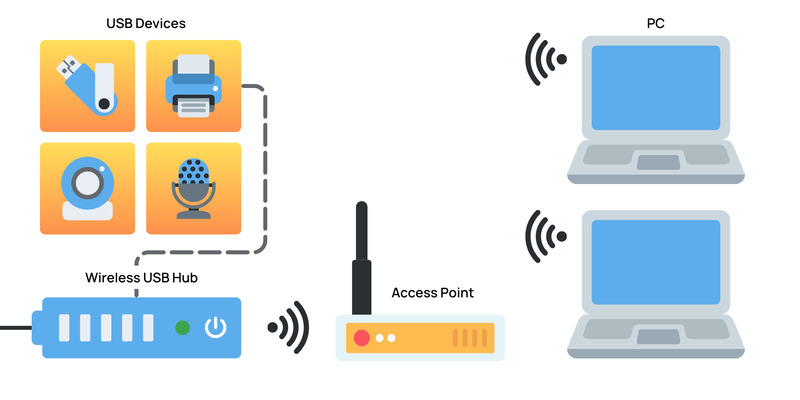
With wireless USB hubs, physical cable connections are no longer necessary. All you need to do is:
- Connect devices to the hub and then turn on the Wi-Fi on the sharing station.
- After doing so, the sharing station establishes a wireless connection to your PC and transfers information.
- With this setup, you develop a USB-to-Wi-Fi link that allows you to access USB devices all through your network.
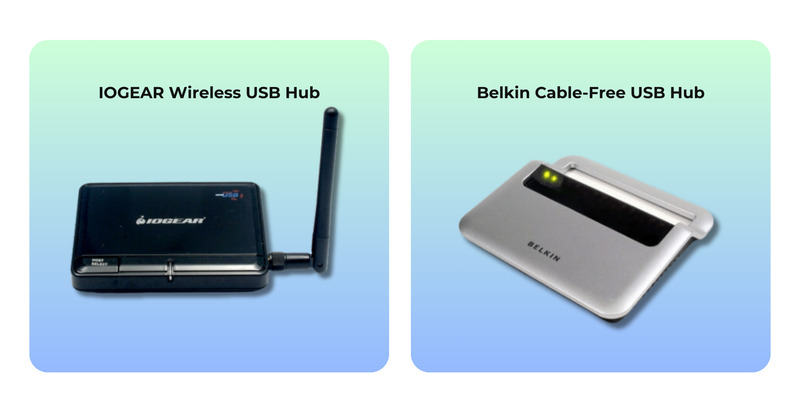
A few years ago, the IOGEAR Wireless USB Hub and the Belkin Cable-Free USB Hub were the most popular USB hubs over Wi-Fi. These particular models, however, are already unavailable on the market. Fortunately, you can find new analogs comparable to those two.
What to keep in mind when using a wireless USB hub?
As of 2024, wireless USB extenders are starting to lose their popularity due to the following features:
Restricted range. A Wi-Fi USB hub usually has a limited operating range. If you move too far from the hub, you may experience connection problems. You often need to stay physically close, usually within 30 meters (100 feet) of the wireless USB hub adapter. In some cases, you need to be even closer to the sharing station.
The lack of remote abilities. If you need to provide access to devices for someone who is physically distant, you can’t do it with a physical USB hub with wireless capability. Other users should be located within the range of your Wi-Fi router.
Slow data transfer speeds. A DIY wireless USB hub has lower bandwidth compared to fully wireless data transfer hubs. It can limit your work when you transfer large files or use devices that require high bandwidth.
Compatibility. A wireless USB port hub is not compatible with as many devices. They may not support older devices, and some hubs may not accept USB radio-controlled mice, limiting their potential usage.
Set-Up complexity. Setting up a wireless USB hub and adapter kit can be complex, even for tech-savvy users. It may involve configuring wireless settings, drivers, and security features.
Limited Ports number. Wireless USB hubs typically have a limited number of USB ports, often supporting up to 8 devices. It may not be sufficient for all your device bundles, so you may start looking for multiple hubs, occupying even more physical space.
Reliability. Wireless USB extension connections can be prone to dropouts or signal fluctuations. This can be frustrating in situations where a user requires a stable connection with high bandwidth.
Luckily for you, there are numerous software solutions available to replace physical USB over Wi-Fi hubs. Explore these software measures to extend your USB device networks with ease.
Related Articles
How to Make a USB Hub Wireless?
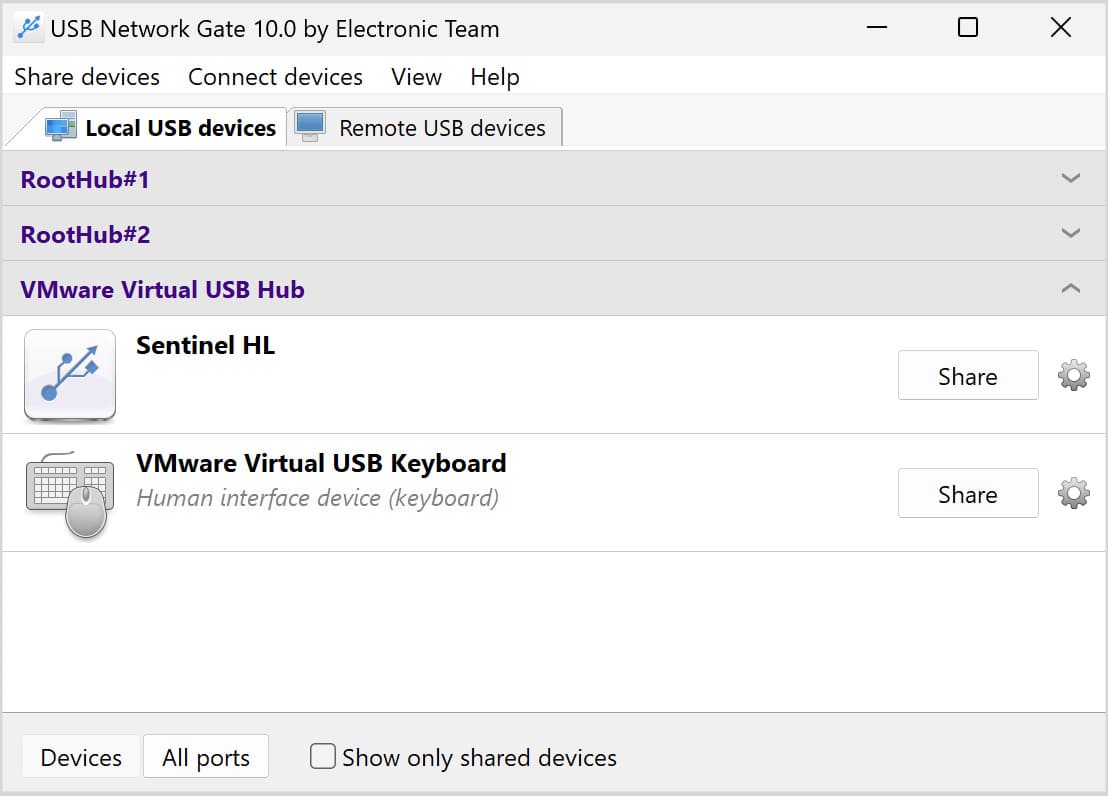
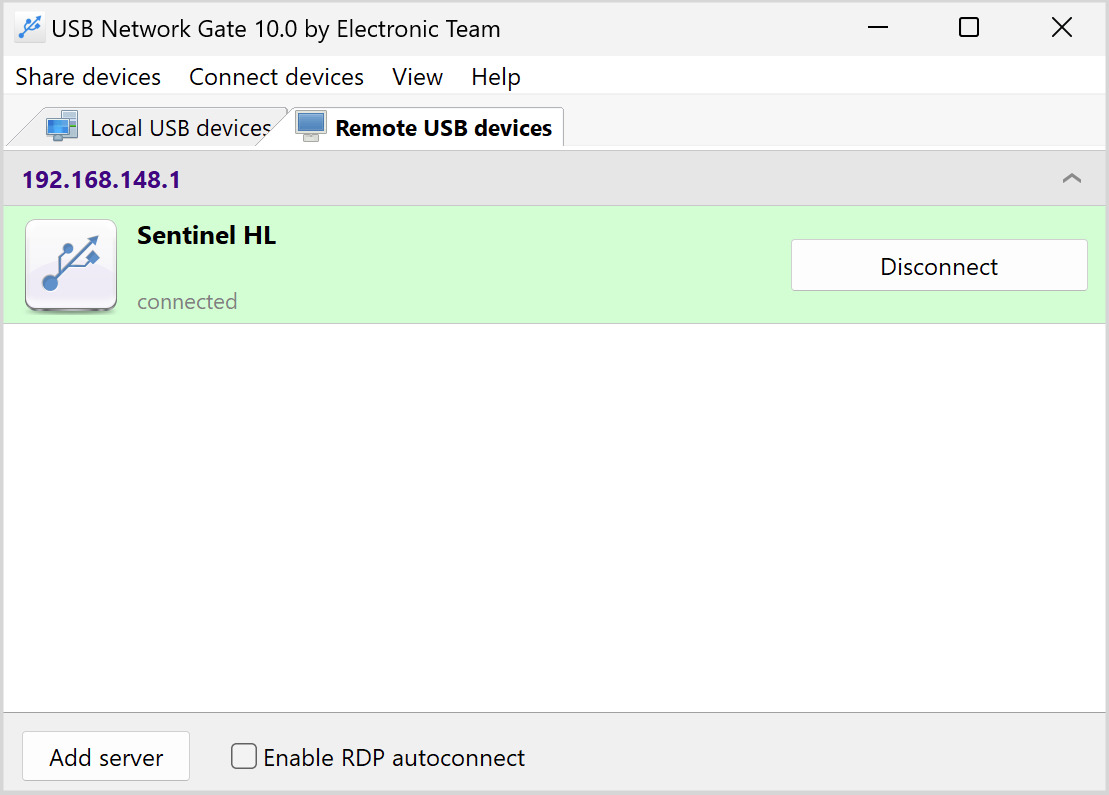
Free USB over Network lets you take a standard USB hub and turn it into a wireless device. All you need to do is connect devices to a USB hub and plug them into the computer. After that, you can share remote access to those devices worldwide, regardless of their location.
This approach allows you to simultaneously use a wireless USB hub for multiple devices.
It will also suit situations when you need to transfer information from various scattered devices to the main one. For instance, imagine that you have three large offices in different cities, and you need to gather information on the arrivals and departures of all your employees at the main office. Each office has multiple ID card scanners. Deploying this network configuration with traditional USB wireless hubs would be impossible. However, it’s easy to implement with a software-based USB hub.

Try a Wireless USB Splitter now
Free version available